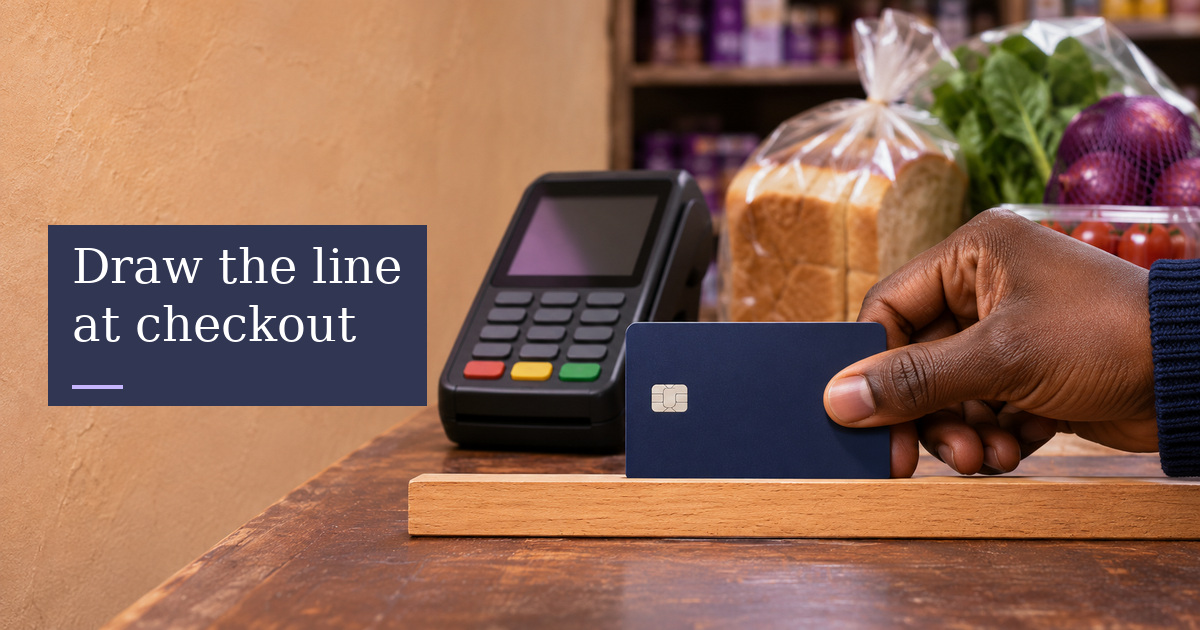
The National Consumer Commission has warned retailers — particularly small independent shops and spaza traders — against adding a "card fee" of a few rand when customers pay with a bank card. The practice, reported at the end of August, typically adds between R2 and R10 to a transaction, presented as the cost of using the shop's card machine. According to the Commission, it is unlawful.
What the law says
The Consumer Protection Act requires that a supplier may not charge more than the displayed price for goods. As the NCC's spokesperson put it, the Act "is very clear that a supplier cannot charge a consumer a price that is outside what they have displayed." A surcharge added at the till because you chose card over cash is exactly that — a price above the displayed price. The Act separately requires that goods carry a clearly displayed price in the first place, either on the item or immediately next to it.
Why a few rand matters
R5 on a loaf of bread sounds trivial, but for households buying daily essentials at local shops, card surcharges compound into a meaningful annual cost — a hidden percentage levy on the people least able to absorb it. There is also a principle at stake: card acceptance costs are a normal business expense, built into pricing like rent or electricity, not something to be recovered from individual customers at the point of payment. The rise of tap-to-pay has made cards the default for millions of South Africans, which is precisely why the Commission is drawing the line now.
What you can do
If a shop asks for a card surcharge, you are entitled to pay the displayed price and to decline the extra charge. Where a trader insists, note the shop's details and report the matter to the National Consumer Commission through its contact centre, website or social media channels. Households that budget carefully may also want to glance at till slips for these small additions — they are easy to miss and, once noticed, easy to challenge.
Consumer rights are part of financial wellbeing: money protected at the till is money available for savings, cover and debt reduction. If you would like help building a household budget and financial plan that makes every rand count, please speak to the Navigate Wealth team.
Sources and further reading
This article is intended for general information and financial education only and does not constitute personalised financial, investment, tax or legal advice. Financial decisions should be based on your individual circumstances and, where appropriate, discussed with a qualified adviser or tax professional. Navigate Wealth is a trading name of Wealthfront (Pty) Ltd, an authorised financial services provider, FSP 54606.