Family trusts in South Africa were built for property, shares, policies and cash. A growing number now hold something the deed never contemplated: a wallet. Two things make this worth a trustee meeting rather than a passing thought.
The first is that South Africa switched on the Crypto-Asset Reporting Framework on 1 March 2026. The second is older and more mundane: the duties trustees already carry, which do not bend to accommodate an asset class that can disappear with a forgotten password.
What actually changed in March
The Crypto-Asset Reporting Framework, developed by the OECD, obliges crypto-asset service providers with a South African connection to identify their users and report them. Exchanges, brokers, dealers, custody providers and trading platforms must now collect self-certifications and report user details together with five categories of transaction, including crypto-to-crypto exchanges, purchases with rands, disposals for rands, wallet transfers and large retail payments.
The first reporting period runs from 1 March 2026 to 28 February 2027. Providers submit to SARS by 31 May 2027, and the first exchange of information with other participating countries follows in September 2027.
Individual taxpayers and trusts do not report under this framework themselves. They must still declare crypto transactions in the ordinary way, in their income tax returns. The change is not a new tax. It is that the trust's activity on a platform is now visible to SARS from the platform's side, and any difference between what was reported and what was declared will be visible too.
A trust may hold digital assets, but the deed must allow it
Trustees act under the Trust Property Control Act, which requires them to keep trust property separate from their own, and to act with the care, diligence and skill that can reasonably be expected of a person managing the affairs of another. Applied to a wallet, that is not an abstraction. It means the deed should expressly permit the acquisition and holding of digital assets, and the trustees should record where the assets are held, who may transact, and what the mandate is.
Two related points are often missed. Crypto assets have been a financial product under the Financial Advisory and Intermediary Services Act since October 2022, so anyone advising a trust on them or intermediating the transaction must hold the appropriate licence. And trustees are separately obliged to keep a beneficial ownership register and lodge it with the Master of the High Court, whatever the trust holds.
The failure point is not tax. It is the key
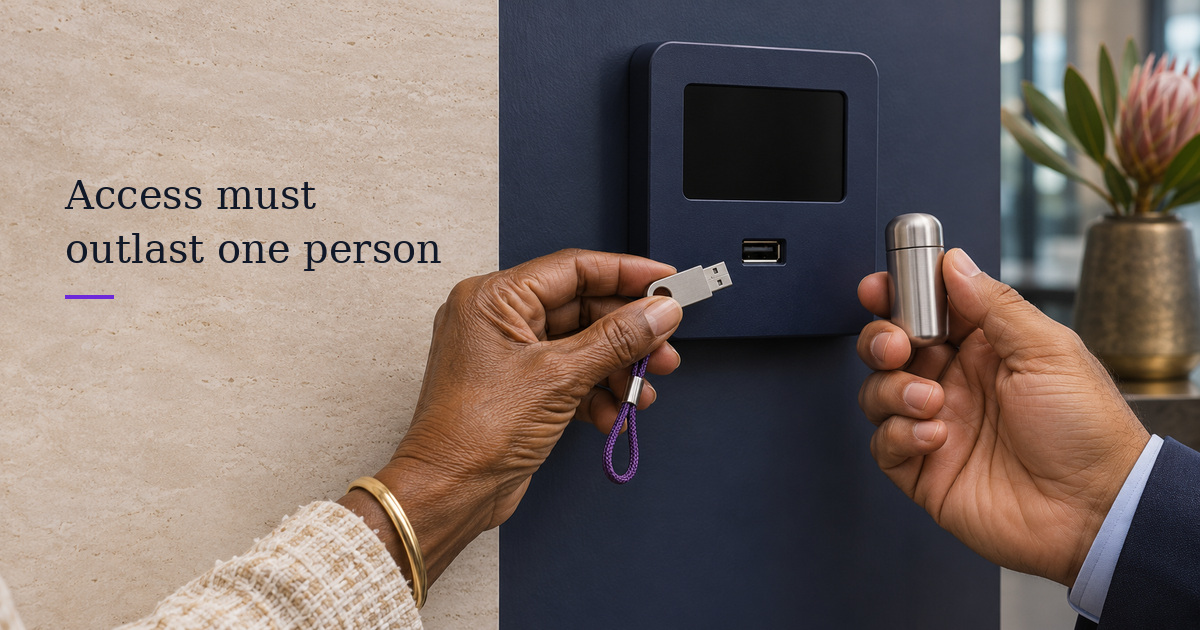
The most expensive problem we see discussed in this area has nothing to do with SARS. If only one person knows how to access a wallet, the trust owns an asset it cannot reach the moment that person is unavailable. No court order recovers a lost private key.
Custody should therefore be a documented trustee decision: a regulated custodian, or a clearly recorded arrangement for who holds what, with access that survives one individual. Recovery information belongs in a secure record referenced in the trust's minutes and in the family's estate file, not in a will, which becomes a public document once lodged.
The tax questions worth answering in advance
Whether a gain is revenue or capital turns on intention and conduct, not on the asset. Frequent trading points to revenue; a long-held position acquired for growth points to capital. Every disposal is potentially an event, including swapping one crypto asset for another, which many holders do not think of as a sale at all.
Where the gain sits also matters. A trust that retains a capital gain is taxed at an effective 36 percent, against a maximum of 18 percent for an individual. Distributing the gain to a beneficiary in the same tax year can change that outcome through the conduit principle, but only if it is properly resolved and recorded before year end. That is a decision to take deliberately in February, not to discover in an assessment.
What we would ask trustees to check
- Does the deed permit these assets, and does the investment mandate address concentration?
- Who holds custody, who may transact, and what happens if that person dies or is incapacitated?
- Are transaction records complete enough to prove cost, date and purpose years later?
- Is the beneficial ownership register with the Master current?
- Has the year-end distribution decision been considered before 28 February?
Digital assets are not disqualified from careful planning. They simply punish informality more harshly than the assets trustees are used to.
If your trust holds digital assets, or you are considering moving them into one, we would be glad to work through the deed, the custody arrangement and the tax position with you and your trustees.
Sources and further reading
- SARS: Crypto-Asset Reporting Framework (CARF)
- SARS: The CARF takes effect
- FSCA: Declaration of crypto assets as a financial product
- Department of Justice: Master of the High Court – Trusts
This article is intended for general information and financial education only and does not constitute personalised financial, investment, tax or legal advice. Financial decisions should be based on your individual circumstances and, where appropriate, discussed with a qualified adviser or tax professional. Navigate Wealth is a trading name of Wealthfront (Pty) Ltd, an authorised financial services provider, FSP 54606.