Most protection plans we review are built in the same order. Life cover first, because it is the one everybody understands. Then a disability lump sum. Then severe illness cover, usually for cancer and heart conditions. Income protection, if it appears at all, is added last and often trimmed first when the premium looks uncomfortable.
Claims experience published this month by the insurer Bidvest Life, drawn from its own 2024 claims book, suggests that ordering is close to upside down. On its figures, clients were four and a half times more likely to claim on income protection than on a severe illness lump sum. More than half of income protection claimants had claimed before.
One insurer's book is not the whole market, and we would not present it as such. But the direction is consistent with what we see in practice, and it points at a gap worth taking seriously.
Why the ordering goes wrong
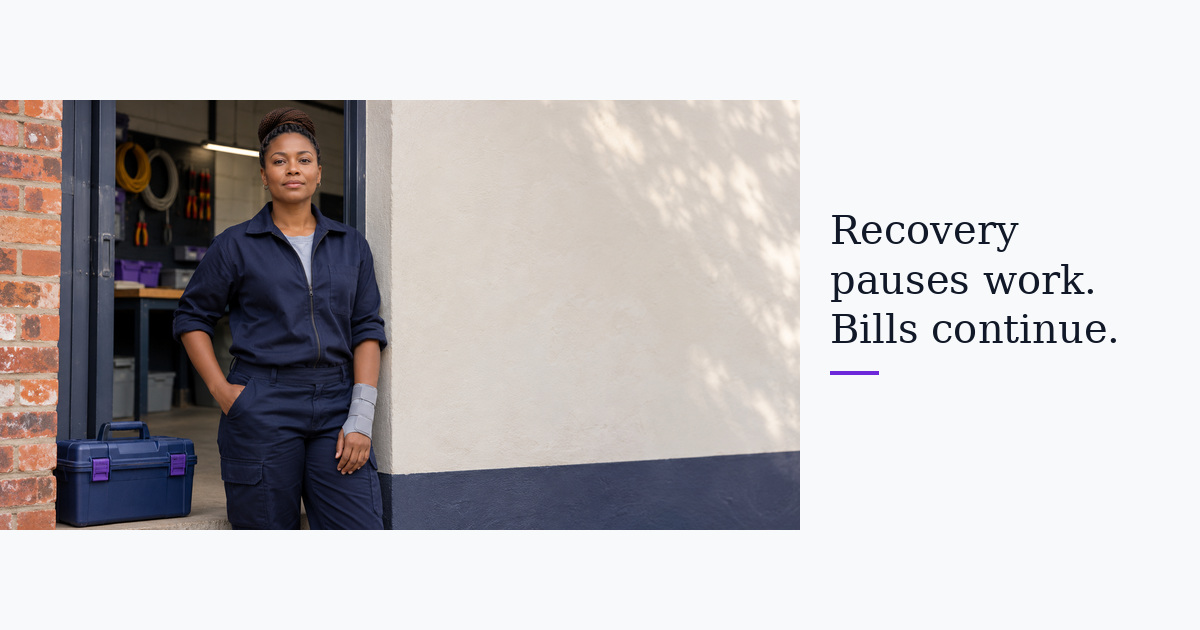
Death and permanent disability are catastrophic, and people insure against them because the consequence is easy to picture. They are also, during working life, relatively rare. What happens far more often is an interruption: surgery and a recovery period, a back injury, a difficult pregnancy, a course of treatment that leaves you unable to work for two or three months.
That interruption does not trigger a life policy or a permanent disability lump sum. It may not meet a severe illness definition either, because those policies pay on a listed diagnosis at a defined severity, not on being unable to work. Income protection is the only cover in most portfolios designed for exactly that event.
The financial consequence is straightforward. Someone earning R45 000 a month who is off work for three months loses R135 000 of income. Very few households have that sitting in an emergency fund, and the usual substitute is credit, taken at the worst possible moment.
The pattern in women's claims
The same claims data shows women accounting for 51% of income protection claimants, with 19% of all income protection claims relating to childbirth. That is not a marginal statistic. It describes a predictable, plannable interruption to earnings that most protection plans simply do not cover.
It matters more than it once did because of who carries the household. According to Statistics South Africa's General Household Survey, more than four in ten South African households are headed by women. Where a household's income rests on one earner, the case for protecting that income rather than only insuring the earner's death becomes considerably stronger.
What to check in your own cover
Income protection is not a single product, and the detail determines whether it pays.
Waiting period. This is the gap between the day you stop working and the day the benefit starts. A seven or fourteen day waiting period behaves very differently from a three-month one, and the shorter periods are what catch the short, common claims.
Temporary or permanent. Some benefits only pay if the incapacity becomes permanent. Others pay for temporary incapacity. Only the latter answers the scenario described above.
Occupation definition. Cover that pays when you cannot perform your own occupation is far more valuable than cover that pays only when you cannot perform any occupation you are reasonably suited to.
Group cover you assume you have. Employer income protection typically carries a long waiting period and almost always ends when your employment does. If you resign, are retrenched, or move to consulting, it goes with the job.
Escalation. A benefit fixed at today's salary erodes. Check how it grows, both before and during a claim.
One further point is often missed. Because premiums for income protection are not tax deductible, the benefit is paid to you free of income tax. That means cover set at, say, 75% of your gross salary may replace considerably more of your actual take-home pay than the percentage suggests. Your own tax position should be confirmed with a tax adviser, but it is worth understanding before deciding the benefit is too small or too large.
How we would approach it
We are not suggesting that anyone cancel life cover in favour of income protection. Dependants still need providing for. The point is about sequence and proportion: for most working people, the risk that actually materialises during their career is a temporary loss of earnings, and that is usually the thinnest part of the plan.
A sensible review starts with a simple question. If your income stopped on Monday, how long could the household run on what is already in place, including sick leave, an emergency fund and any employer benefit, before something had to be sold or borrowed? The answer tends to make the right waiting period obvious.
If you would like us to review how your income, not only your life, is protected, and how any employer benefits fit alongside your own cover, please speak to the Navigate Wealth team.