On 8 September 2026 the High Court in Mthatha held Eskom fully liable for an incident in which three young children of one family were burned by electricity that entered their home. The facts are distressing, but the reason for the outcome is what should interest households, because it applies to every electricity consumer in the country and almost nobody knows it is there.
The law starts from the assumption that the supplier was at fault
Section 25 of the Electricity Regulation Act reads, in full:
“In any civil proceedings against a licensee arising out of damage or injury caused by induction or electrolysis or in any other manner by means of electricity generated, transmitted or distributed by a licensee, such damage or injury is deemed to have been caused by the negligence of the licensee, unless there is credible evidence to the contrary.”
In ordinary civil claims the person who suffers harm must prove that the defendant was negligent, which is difficult and expensive when the defendant owns all the technical records. Section 25 inverts that. Once it is accepted that the harm was caused by electricity from a licensee, negligence is deemed, and it is for the licensee to produce credible evidence that it was not negligent. The provision has been in force since 2006 and was not changed by the 2024 amendment Act.
What the court decided
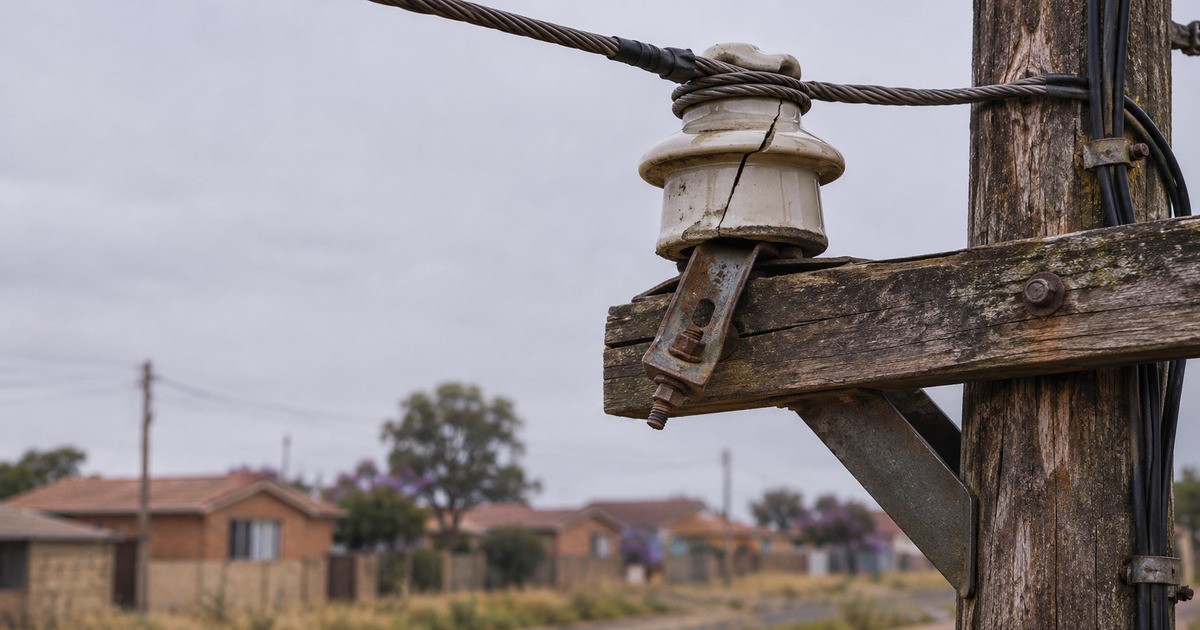
In B.M obo K.M and Others v Eskom Holdings Limited, the community had reported two dangerously leaning poles on 26 July 2019 and asked that power not be restored until they were repaired. Power was restored that evening. The following morning the poles fell, a high-voltage line made contact with the line serving the homes, and electricity entered the house, injuring an eleven-month-old child and two older siblings.
The court separated liability from the amount of damages, so this judgment decides only who is responsible; the damages, pleaded at R14.67 million, will be determined separately. On liability, Eskom’s defence was that the poles had been vandalised. The court found that defence was not made out, and held in addition that even if vandalism had been proved it would not have broken the chain of causation, because interference with infrastructure of this kind is foreseeable. Since the report had been made the day before, the supplier had actual knowledge of the danger and neither isolated the line nor attended to it. The order was 100 per cent liability, with costs.
It is worth noting what did not succeed. A separate ground, that the supplier had failed to educate the community about electrical danger, was dismissed: the community plainly already understood the danger, so the omission was not causally connected to the harm.
The presumption helps, but it is not a guarantee
Anyone reading this one judgment could come away thinking liability is now automatic. It is not, and the case law is genuinely unsettled. In March 2025 the High Court in Pretoria took a markedly different view in a claim arising from the death of a seven-year-old child, holding that where vandalism enters the picture section 25 finds no application at all, because vandalised equipment is no longer the installation the licensee distributed. That claim was dismissed with costs. A separate matter in Mthatha itself failed because the cause of a house fire could not be established, so there was nothing for the presumption to attach to.
Two divisions of the same court are therefore reasoning differently about the same words. Until that is resolved on appeal, a claimant’s position depends partly on where the matter is heard and heavily on whether the cause of the harm can be identified at all.
Two procedural points that decide real claims
The first is notice. For years, claims against Eskom ran into the argument that it was an organ of state and was entitled to six months’ written notice under the Institution of Legal Proceedings against Certain Organs of State Act before proceedings could be issued. In April 2026 the Supreme Court of Appeal held that Eskom is not an organ of state for the purposes of that Act and is not entitled to that notice. That removes a real barrier. But the Act’s definition expressly includes municipalities, and in much of the country it is the municipality, not Eskom, that distributes your electricity. Where that is so, the six-month notice requirement does apply, running from the date the debt became due, although a court may condone a failure to give it. The first question in any such claim is therefore simply: who is my distributor?
The second is time. A claim of this kind prescribes after three years, running from when the debt became due, which is broadly when you know who caused the harm and the facts giving rise to it. Where the injured person is a child, prescription does not stop running but it cannot be completed until a year after the child reaches majority, so a young child’s claim survives considerably longer than a parent’s own claim arising from the same incident. Those are different clocks on the same facts, and parents routinely lose their own claim while the child’s remains alive.
What this means for your cover
Most households meet this issue as property damage rather than injury, and the insurance position is less generous than people assume. Cover for appliances and electronics damaged by a power surge is widely available, but it is product-dependent: in some policies it is included and in others it is an optional extension with a limit you selected, sometimes years ago and sometimes very low. The outage itself is not an insurable event. Surge claims are not unusual either, accounting for roughly a fifth of household contents complaints closed by the ombud in 2024.
So there are two tracks, and they should not be confused. Insurance is the fast track, and it pays within policy limits regardless of who was at fault. A delictual claim against the distributor is the slow track, it is where serious injury and loss of earnings are recovered, and as this judgment shows it can take seven years to reach a liability finding alone. Income protection, severe-illness cover and your medical scheme carry the household in the meantime, which is precisely why those are the covers that should not be trimmed to fund something else.
Practical steps
Report faults in writing, or get a reference number for a telephone report, and keep it. The decisive fact in this case was that the danger had been reported the day before. Photograph visible hazards such as leaning poles, sagging conductors or exposed cable, with the date. Keep repair invoices and appliance replacement receipts. Check your surge extension and its limit, and check it against what you actually own now rather than what you owned when the policy was written. And establish whether Eskom or your municipality supplies you, because the procedure differs.
If you would like us to review your household cover, your surge limits or your income protection in light of this, please speak to the Navigate Wealth team.
Sources and further reading
- Electricity Regulation Act 4 of 2006, section 25
- B.M obo K.M and Others v Eskom Holdings Limited (2865/2022) [2026] ZAECMHC 60 (8 September 2026)
- Motloung and Another v Eskom Holdings Limited (39072/2020) [2025] ZAGPPHC 298 (17 March 2025)
- Institution of Legal Proceedings against Certain Organs of State Act 40 of 2002, section 3
- Prescription Act 68 of 1969, sections 11, 12 and 13