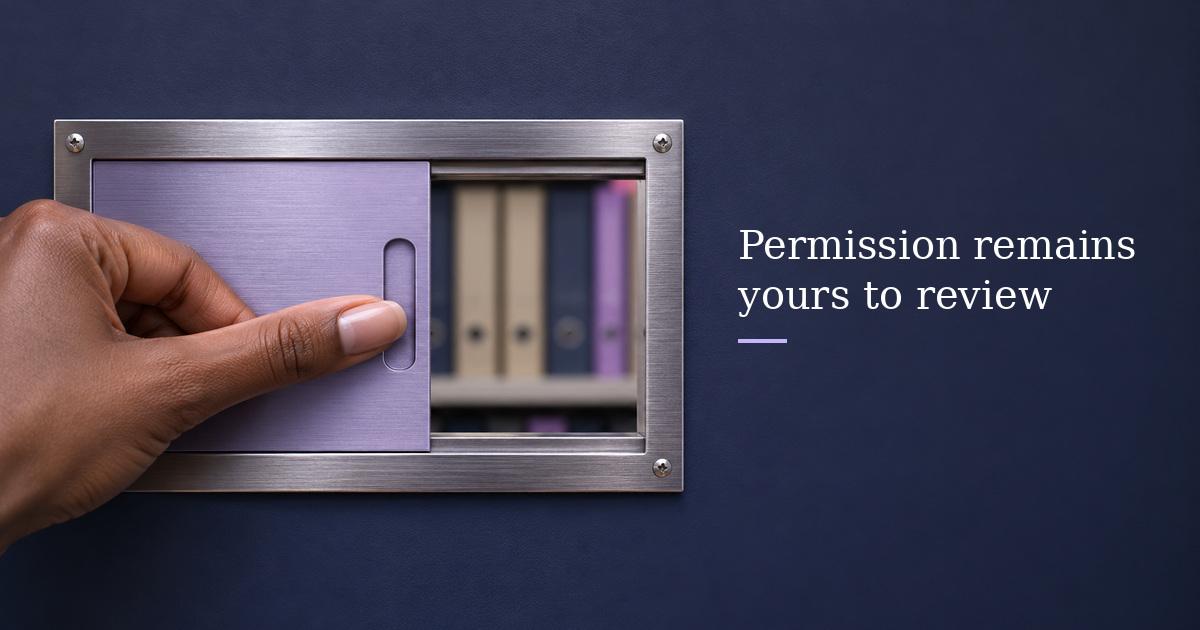
Somewhere in the paperwork of every new adviser relationship there is a consent form. It is usually signed early, alongside a dozen other documents, and rarely read closely. It is also the single most powerful document in the file, because it is what allows an adviser to see what you own.
South Africa’s advice industry runs on a shared data platform that connects advisers to product providers. When you sign that consent, you authorise a named financial services provider and its registered users to request your information from insurers, collective investment scheme managers and retirement funds. The consent covers long-term insurance, unit trusts, pension and retirement fund holdings and other financial products, and it generally remains in force until you cancel it in writing or until a stated period expires.
That is genuinely useful. It is how an adviser can tell you what cover you actually hold rather than what you remember holding, and how duplicated or lapsed policies get found. But it is worth understanding what you have agreed to.
A licence is not permission
The point most people get wrong is this: being a licensed financial services provider does not, by itself, entitle anyone to look at your information. The licence permits someone to give advice. Your consent is what permits them to see your affairs. The two are separate, and only one of them is yours to give or withdraw.
The Protection of Personal Information Act sets out the framework. Section 11 requires a lawful basis for processing personal information, of which consent is one. Section 19 requires appropriate technical and organisational security measures. Sections 20 and 21 govern anyone processing information on another party’s behalf, requiring a written contract and immediate notification if information is accessed without authority. Section 22 requires notification to the Information Regulator and to affected individuals where a security compromise occurs.
The platform’s own contractual terms sit on top of that. They require that only authorised users who have obtained the necessary consent may submit a request, that a firm be able to produce the consent record within three business days if asked, that an audit trail be kept of every request made, and that access may be suspended or terminated where those obligations are breached.
What that means you can actually do
Four things are worth acting on, and none of them takes long.
- Read the consent you signed, and note which product types it covers and whether it has an end date. Many do not.
- Ask your adviser what they can currently see. A firm that cannot answer this clearly is not a firm that is monitoring its own access.
- Ask for a record of who has accessed your information. Individuals are able to request this, and very few ever do.
- When you leave an adviser, cancel the consent in writing. Ending the advice relationship does not automatically end the data permission, and this is the step almost everyone skips.
The part that does not get revisited
In our experience the risk here is rarely dramatic. It is that a consent signed in 2014 is still live in 2026, covering an adviser you no longer deal with, at a firm you may have forgotten, with no end date and no one reviewing it.
We think a consent should be treated the same way as a beneficiary nomination or a will: correct at the time it was signed, and worth confirming periodically that it still reflects what you want. It costs nothing to check, and it is the kind of housekeeping that only ever looks important in hindsight.
If you would like to review who currently holds permission to access your financial information, and to tidy up consents that have outlived their purpose, please speak to the Navigate Wealth team.